Introduction
There’s a very specific moment happening in tech right now.
You open your laptop.
You type a half-baked idea. Something like:
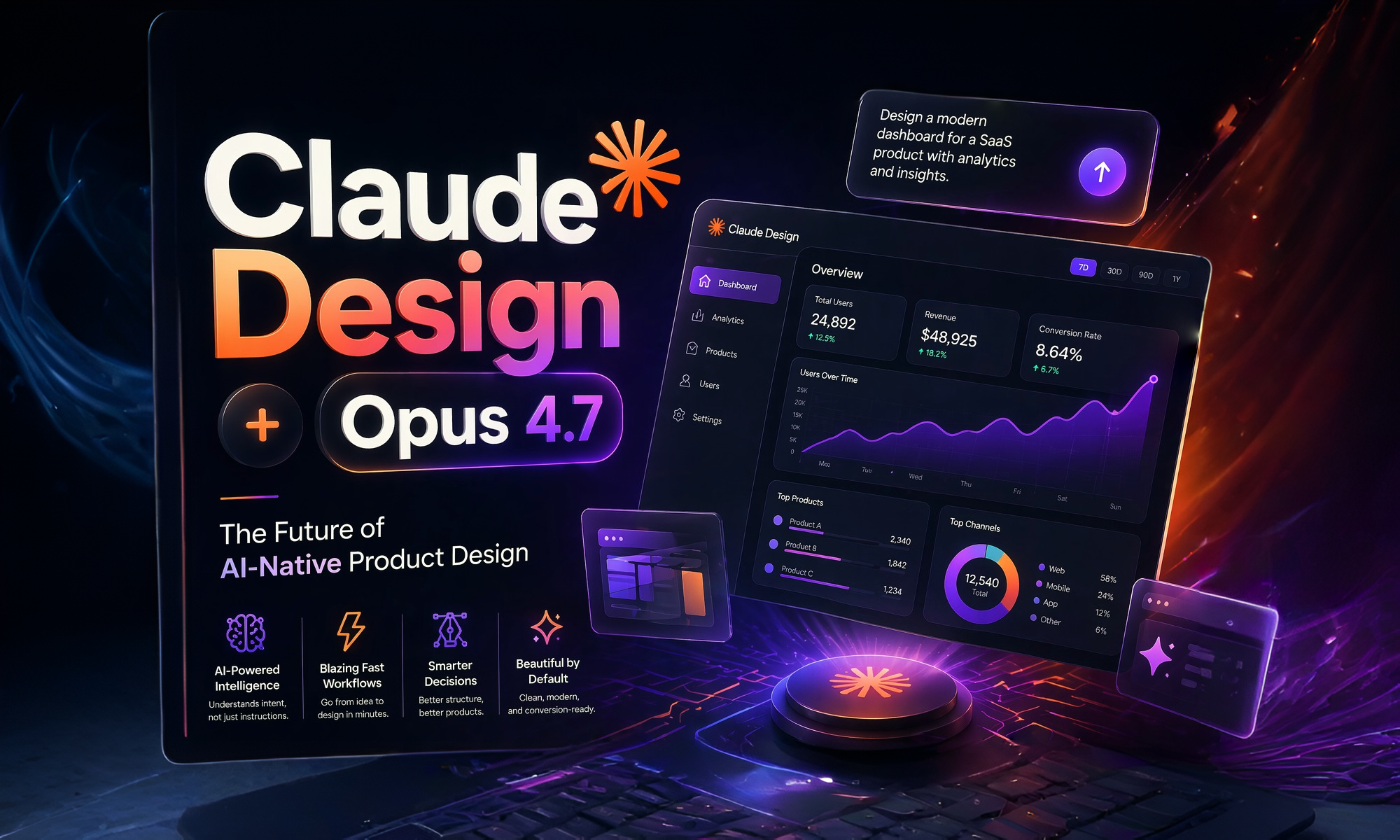
“Design a clean, modern dashboard with smooth interactions and calming visuals.”
You hit enter.
And instead of getting a few suggestions or a generic layout… you get something that feels dangerously close to a finished product. Structure. Flow. Design logic. Even the tiny decisions you didn’t think through yet.
That moment? Yeah, that’s where Claude Design + Opus 4.7 steps in.
And honestly, it’s changing the way we think about product design.
What Is Claude Design + Opus 4.7?
Let’s keep this simple.
Claude Design is not just a tool. It’s more like a thinking partner for product design. It understands intent, not just instructions.
Opus 4.7 is the engine behind it. The part that actually thinks deeply, connects dots, and makes decisions that don’t feel random.
Put them together, and you get something that doesn’t just generate UI… it understands why the UI should exist in a certain way.
And that’s a big shift.
From Tools to Teammates
We’ve used design tools for years. Figma, Sketch, Adobe XD… all great.
But here’s the truth:
They wait for you to tell them what to do.
Claude Design + Opus 4.7 doesn’t wait.
You give it a direction, and it fills in the blanks like a designer who has:
- Seen 1000+ product flows
- Made every possible UX mistake already
- And learned from all of them
It suggests structure. It questions bad decisions (silently, but still). It even makes choices that feel… annoyingly correct.
It’s less like using software and more like collaborating with someone who doesn’t get tired or ask for coffee breaks.
Our Experience Using It
We actually used Claude Design + Opus 4.7 while shaping parts of our own product, “Water Sort”. What started as a ‘let’s just explore a few UI ideas’ quickly turned into ‘why does this already feel production-ready?’ It handled flows, interactions, and even tiny design decisions faster than we could argue about them. Not saying it replaced our thinking… but it definitely saved us from a few questionable design choices (you know the ones). Also, keep an eye out… “Water Sort” will be dropping soon.
AI-Native Design: What Does That Even Mean?
“AI-native” sounds fancy, but it’s actually simple.
Traditional design flow:
Idea → Wireframe → Design → Prototype → Fix mistakes → Repeat endlessly
AI-native design:
Idea → AI expands it → You refine → Ship faster than expected
The difference?
You’re no longer starting from zero.
Claude Design + Opus 4.7 acts like a “first draft machine” that’s actually good. Not the kind you throw away. The kind you build on.
Why This Actually Matters
Let’s cut through the buzzwords.
This changes a few real things:
1. Speed without chaos
You move faster, but not in a “break everything” way. The structure is already solid.
2. Better starting points
Blank screens are the worst. This removes them entirely.
3. Smarter decisions by default
Spacing, hierarchy, flow… things that usually take iterations are handled early.
4. Designers focus on taste, not grunt work
Instead of pushing pixels for hours, you refine, tweak, and elevate.
Basically, less “where should this button go?”
More “does this experience feel right?”
A Small Reality Check
Before we get carried away… no, this doesn’t replace designers.
If anything, it exposes bad design thinking faster.
If your idea is weak, AI won’t magically turn it into gold.
It’ll just give you a very well-structured bad idea.
So yeah, taste still matters. A lot.
Where This Is Headed
This is the interesting part.
We’re moving toward a world where:
- You describe products instead of building them from scratch
- Design systems evolve automatically
- Iterations happen in minutes, not days
And honestly… that’s both exciting and slightly terrifying.
Because the bottleneck is no longer tools.
It’s how well you think.
Final Thoughts: This Is Just the Beginning
Claude Design + Opus 4.7 isn’t just another upgrade.
It’s a shift in how products are imagined, structured, and built.
The people who win in this space won’t be the ones who know every tool.
They’ll be the ones who:
- Ask better questions
- Think more clearly
- And know what “good” actually looks like
Because when AI can do the execution…
Taste becomes your biggest advantage.
One Last Thing
If you haven’t tried working this way yet, you’re going to hit that “wait… what just happened?” moment soon.
And when you do…
Yeah, there’s no going back.